Originally written by Michelle Carpenter. Updated by Natural Pod on March 30, 2026.
A child walks into a classroom and within seconds, they start making sense of the space. The light. The colors. The level of visual noise on the walls. Before a single lesson begins, the room already impacts how the child feels and how ready they are to learn.
Building your own calm canvas?
A natural wood foundation works because it doesn’t compete with what children add to the room. Our elementary seating range is designed the same way — adaptable enough to reconfigure as the year changes, without a visual reset every time.
Explore flexible seating for elementary classrooms →
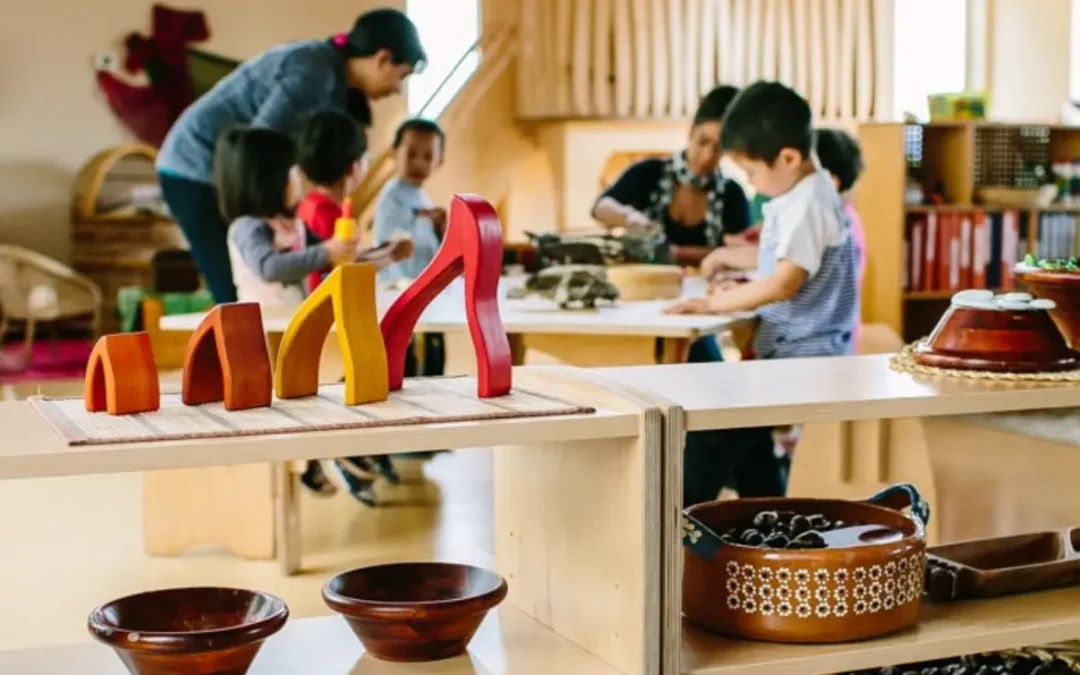
What happens when the child is put at the center of every decision? Sarah Diggle, founder of Purpose Preschool in Alberta, Canada, believes this to be the essential design principle that guided her well-loved Montessori preschool, and demonstrates a perfect example of this in practice.
For educational bold leaders like her, it’s not just intuition leading them.
A study on the impact of classroom design found that the physical design of a classroom accounted for 16% of the difference in how much children learned over a single school year. Seven design factors made a measurable difference, among them ownership, color, and visual complexity.
At Natural Pod, we think about this research like when designing a learning space. Our goal is to create what we call a calm canvas: a visual foundation that allows children to be the most vibrant thing in the room.
A calm canvas for any accents
More visual stimulation doesn’t always mean better learning. Research shows that when it comes to how much is on the walls and around the room, there’s a sweet spot. Learning environments that are too bare underperform, but so do those that are too busy. The best results came from spaces that feel engaging and organized, without tipping into visual chaos.
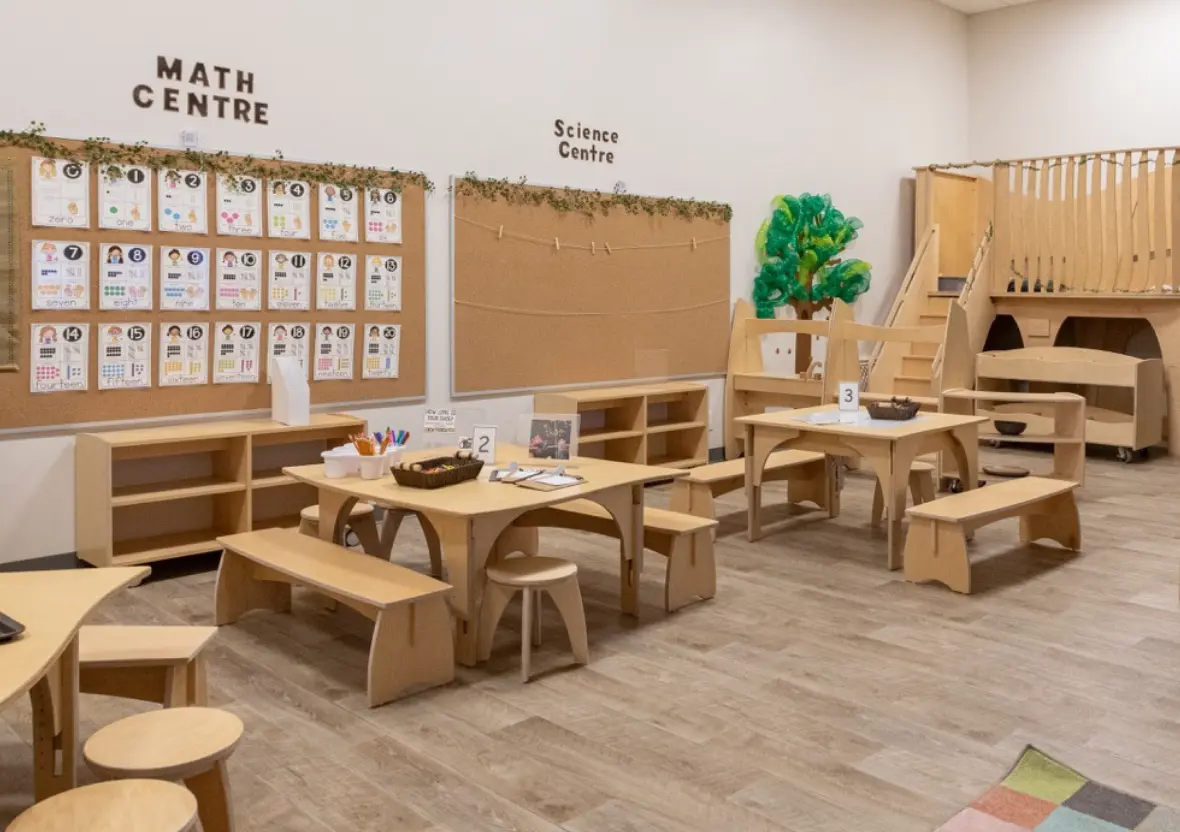
A natural wood palette creates that kind of foundation. It’s calm without being cold. Grounding without being dull. And it leaves space for the things that matter most: the children’s own contributions.
A learner’s artwork pinned to a corkboard. A hand-labeled reading nook. Project displays that rotate with the seasons. These decorations also contribute to something beyond the heart-warming smiles they create. When children’s own work is displayed in the classroom, it builds a sense of ownership, and that ownership is linked to better learning outcomes. When learners see their work reflected in the space around them, the space becomes something they’ve helped build. That feeling of belonging is what makes a space work.
Timeless color palette
Color trends come and go, and the cost of keeping up forces already tight budgets to compete with the materials educators need to actually teach.
High-intensity, bright colors work best as accents or highlights, not as the dominant theme of a room. Children learned more in classrooms with a balance of light or white walls, paired with a feature wall or organized pops of color in displays and furnishings.
Natural wood fits into this picture well. Its warm grain provides a neutral, adaptable base that doesn’t compete with the visual elements educators and children add over time. Instead of replacing furniture every time a design refresh comes along, the same pieces keep working.
There’s a connection to biophilic design here, too. The idea is simple: humans feel better when their surroundings include natural elements. Research suggests that materials like wood and nature-inspired textures help create calming spaces where children can focus and engage more readily. An indoor environment that carries an echo of the natural world does something that fluorescent lights and plastic surfaces don’t. It forges a felt connection to the natural world even in an urban center.
A space they can call their own
Every classroom has a story. The best ones are shaped, in part, by the children who inhabit them.
When the physical environment is calm enough to support focus and practical enough to hold up over time, it becomes more than furniture and walls. It becomes a place where learners see their own work on the walls, where the space reflects who they are. A place in which they belong.
Every child deserves that kind of space, one they can shape, take pride in, and call their own.