Imagine a straight A student who can’t remember a single thing they learned when looking back on their school year. This is the silent crisis of the ‘stand and deliver’ model—an outdated method that prioritizes content delivery over the learning experience. According to Rosa Fazio, former Principal of Vancouver, British Columbia’s Norma Rose Point School, students in these traditional settings are often trained to merely “sit and behave”, which zaps their natural curiosity and leads to disengagement. To truly prepare students for the future, we must move toward student-centered learning models where learners have the agency to pursue knowledge in areas that interest them and the opportunity to advocate for how they learn best.
As Fazio explores in her article, “Focus: Learning,” transitioning from a culture of “teaching” to a culture of “learning” requires more than a new floor plan; it demands a collective shift in pedagogical philosophy and a simultaneous redesign of the physical learning environment to support the divergent tracks of student inquiry.
Educator Philosophy and Culture (The First Shift)
Fazio notes that the culture shift from teaching to learning is the most critical aspect of school philosophy. This shift is the foundation of student-centered learning, redefining the roles within the school community:
- Teachers as Adaptive Experts. Inquiry-based learning is often “messy” and requires more work than traditional instruction. It asks teachers to move from being a “sage on the stage” to a “guide at the side”. These educators must be comfortable deviating from the scripted curriculum to travel “unexpected roads” fueled by student curiosity.
- Leadership as Coaching. Administrators in these environments move beyond simply “administering” policy. Instead, they act as learning coaches who lead by example and have the courage to tackle restrictive policies to allow learning to happen in atypical, innovative ways.
- Redefining Success. When students focus on “sitting and behaving” to get an A, they often forget what they learned as soon as the test is over. An aligned school culture measures success by a student’s desire to learn and their ability to recall knowledge through meaningful inquiry-based learning models.
Designing the Student-Centered Learning Environment (The Second Shift)
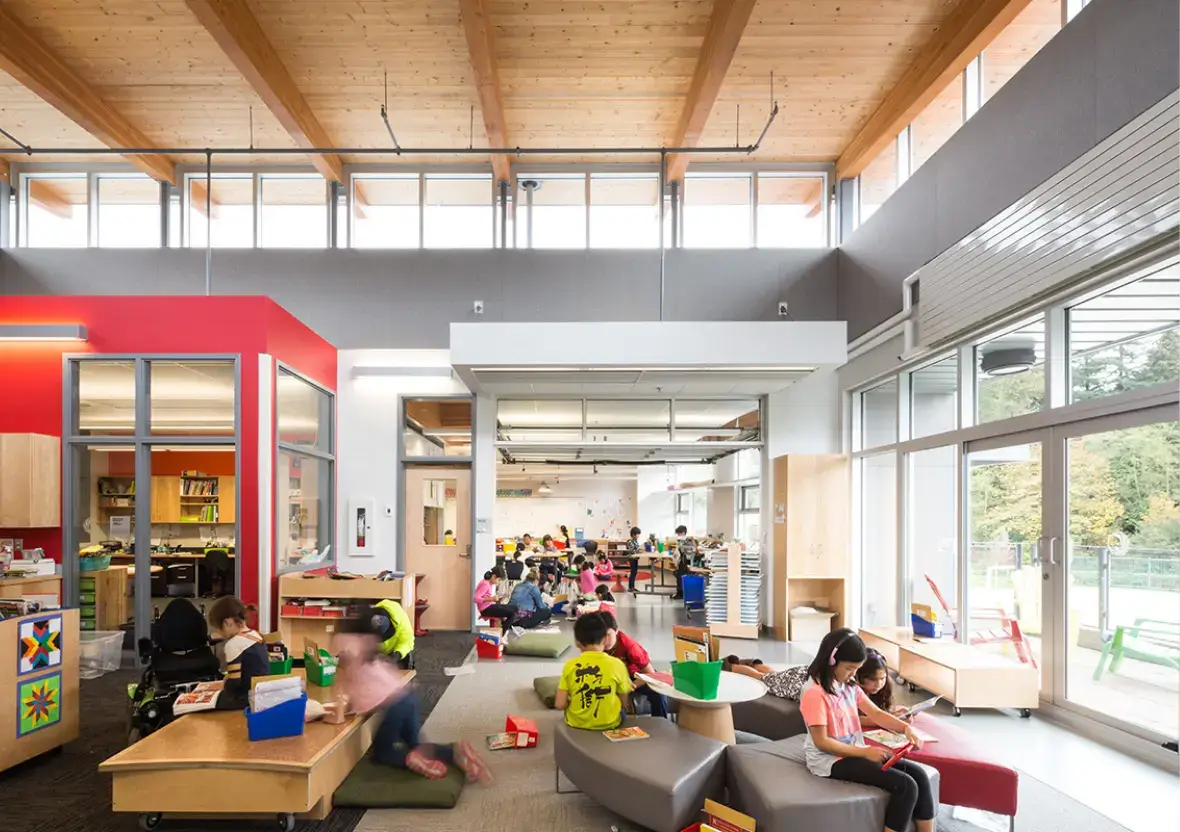
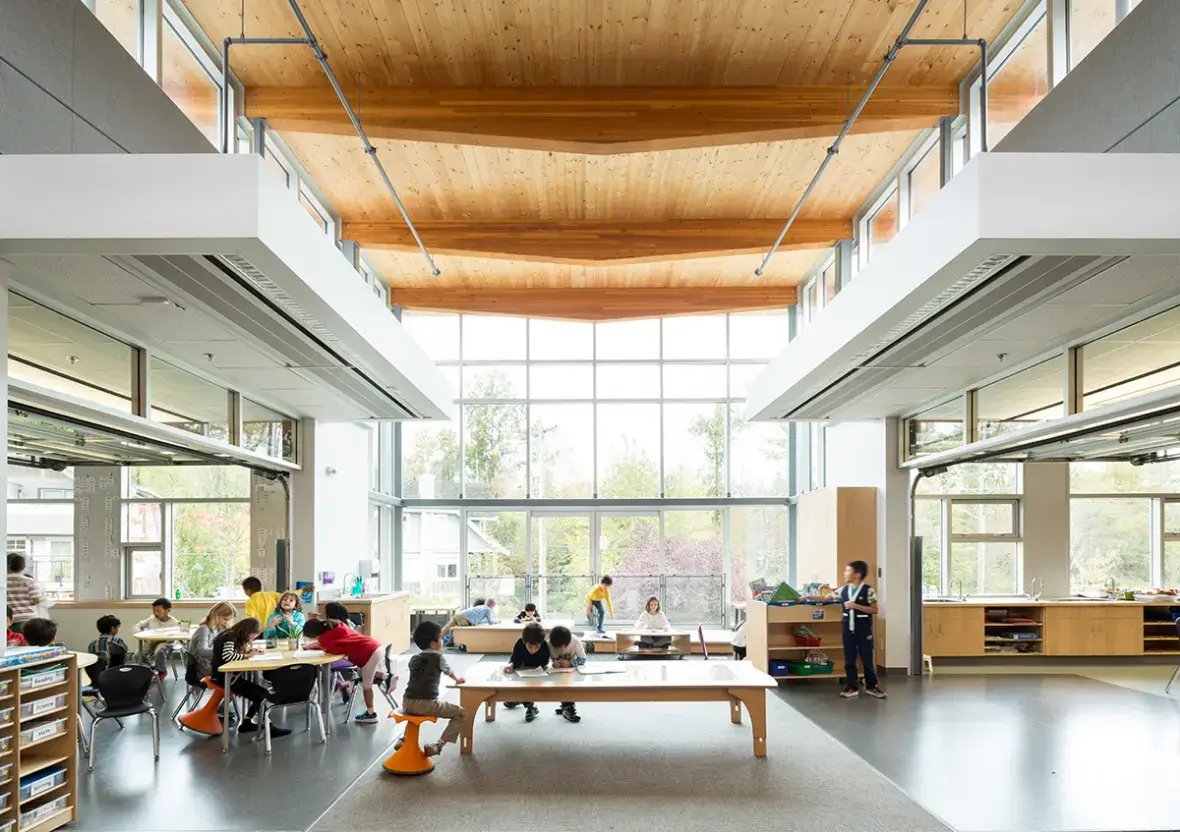
The physical environment is the tool that operationalizes this philosophical shift. It is more challenging for a school to support “adaptive experts” or student agency if its physical space is rooted in traditional, immobile structures.
- An Invitation to Explore. The learning environment should not dictate what and how children learn, but rather provide a canvas for students to be curious, pursue their interests, seek knowledge and inquire.
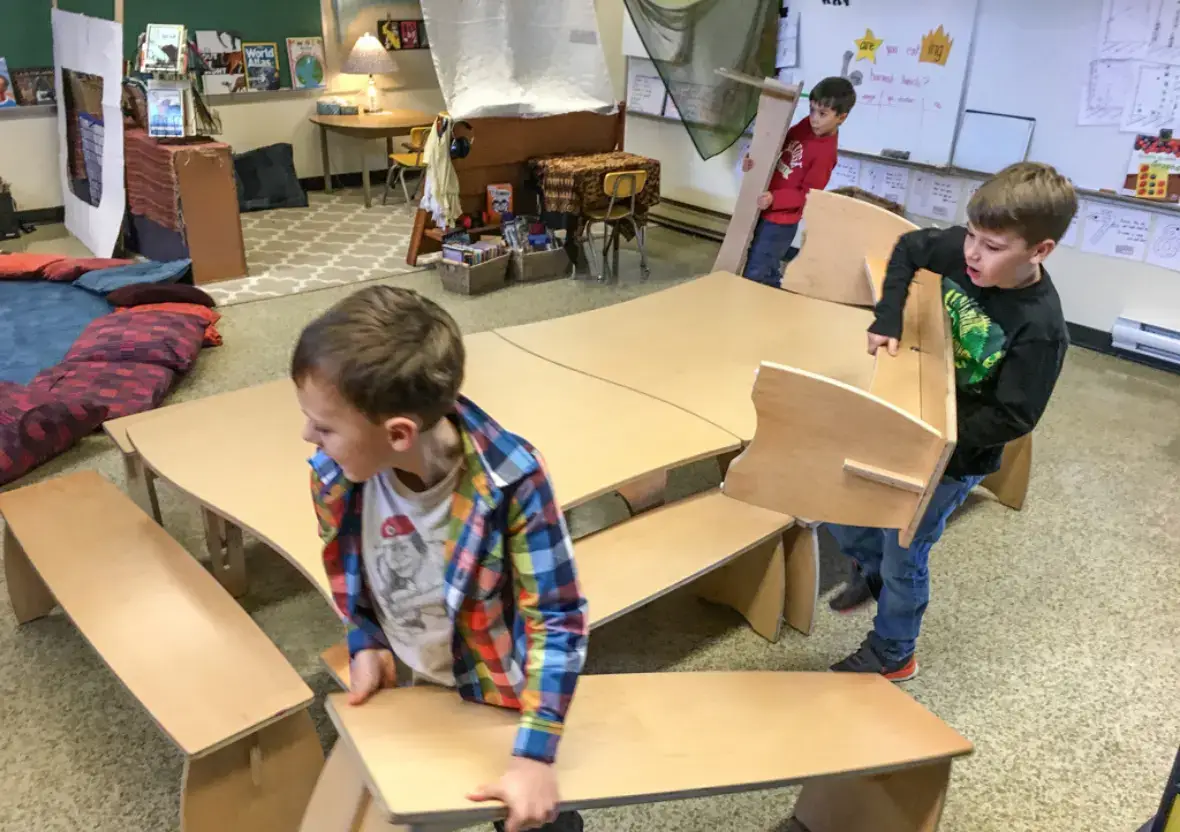
- Flexibility and Agency. To support the “messy” and spontaneous nature of inquiry, spaces must be inherently flexible. Modular furniture allows learners to configure their environment for the task at hand—working through potential solutions either alone or with others, in a quiet nook, or with room for movement.
- Biophilic Design and Well-being. Utilizing natural elements and wood materials creates a neutral, calming palette. This aesthetic reduces stress and improves focus so the outcome is learning.
Leading the Conversation
Intentional design is more than an aesthetic choice; it is a shift in power. By offering students choice within their environment, we empower them to self-advocate, find their own path to success, and thrive. To those who view innovative spaces or student-led pacing as “risky,” we must pose the question Fazio does: “Don’t we risk much more by not doing?“
This evolution is essential to keep the learning experience inspired and relevant. Ultimately, we aren’t just designing student-centered classrooms; we are ensuring that curiosity remains an individual’s most powerful tool. In an era of constant change, the only true risk is standing still. Our mission is to ensure that the spark ignited during a student’s educational journey becomes a flame that persists for life.
Frequently Asked Questions (FAQs)
How do we actually start the transition to student-centered learning without overwhelming teachers?
Shifting to learner-centered education does not require an overnight overhaul. Schools should begin with small pilots—like rearranging one classroom or introducing a single inquiry-based unit—to build teacher confidence. This gradual approach allows educators to become “adaptive experts” without the burnout of immediate, sweeping changes.
How do you grade students when everyone is learning differently?
How do we get skeptical parents on board with this new style?
How can learning environments be designed to support safe risk-taking?
Does this model work for high schoolers facing standardized exams?
About Contributing Author Kelly Rosensweet