There is growing consensus among educators, neuroscientists, and child development researchers that the environments in which children learn matter as much as what they are being taught. Nowhere is this more evident — or more underutilized — than in early childhood education.
Nature-based and biophilic learning environments do something remarkable: they simultaneously reduce the cognitive and emotional barriers to learning while providing rich, concrete contexts in which foundational literacy skills can take root. Nature-based literacy development is not a departure from rigorous early reading instruction. It may be one of its most effective expressions.
The Science of Learning in Nature
The relationship between environment and learning is well-documented. Research in biophilic design has found that students in nature-inspired classrooms experience significantly greater reductions in stress compared to those in conventional spaces (Determan & Akers, 2019). This matters enormously for early literacy, because stress and cognitive load are among the most significant barriers to language acquisition, reading fluency, and writing development.
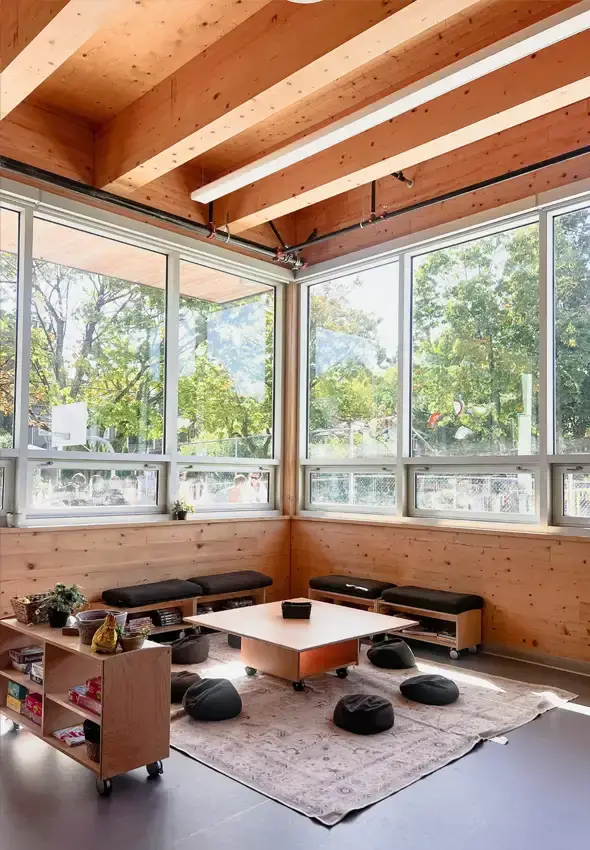
The mechanisms are twofold. First, biophilic elements — natural light, views of greenery, organic textures and forms, wood materials — are associated with stress recovery and improved attentional capacity. Students who can rest their attention on a view of trees or a window of diffused daylight return to focused tasks with greater cognitive resources. Second, outdoor and nature-rich environments provide what researchers call attention restoration: the kind of effortless, voluntary attention that replenishes the directed attention required for academic tasks.
Green schoolyards and outdoor classrooms function not just as recreational spaces, but as cognitive recovery zones — and as a result, the learning that takes place within them or immediately following time in them tends to be more durable.
Concrete Contexts for Abstract Skills
Beyond the physiological benefits, the natural environment offers something that no worksheet can replicate: meaningful context. Early literacy is an exercise in abstraction — children are asked to connect arbitrary symbols to sounds, sounds to meaning, and meaning to the wider world. Nature-based literacy development grounds that abstraction in lived experience.
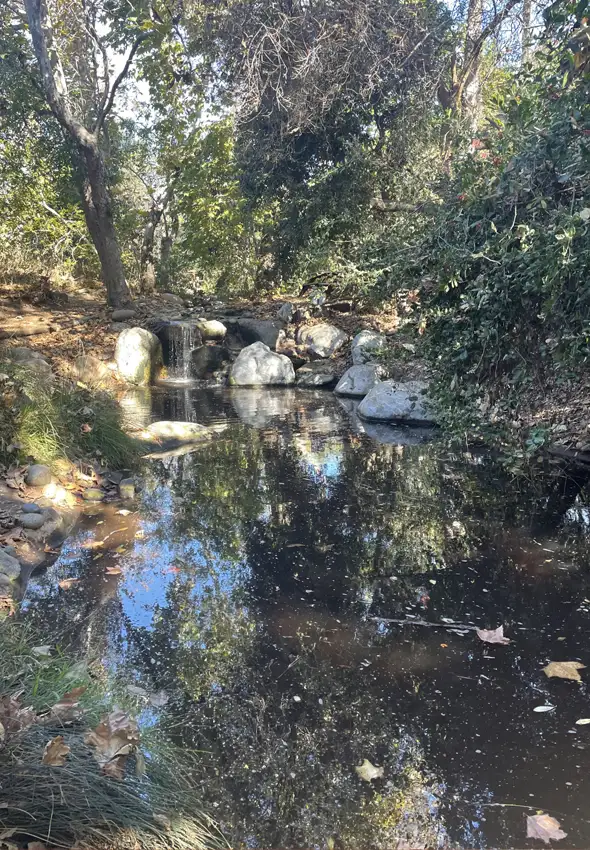
Consider phonemic awareness. When a child stops on a woodland path and listens to water moving over stones, she is already attuned to the granular texture of sound. A skilled educator can extend that moment: “What letter makes that sound? Where else do we hear it?” The natural soundscape becomes a phonemic landscape.
Or consider vocabulary development, one of the strongest predictors of long-term reading comprehension. Children who regularly engage with outdoor environments — observing, describing, discussing — develop richer, more precise descriptive language than those whose vocabulary is built primarily through worksheets and controlled readers. Nature journaling, for example, asks children to reach for words that capture what they see, smell, hear, and feel. That reach is where vocabulary grows.
The same principle applies across all foundational literacy skills:
Phonics is reinforced through Alphabet Nature Walks, where children search for objects that correspond to specific letter sounds — connecting the abstract symbol to something they can hold in their hands.
Reading fluency and expression develop through Echo Reading in outdoor spaces, where the natural rhythm of language is mirrored by the rhythms of the environment itself.
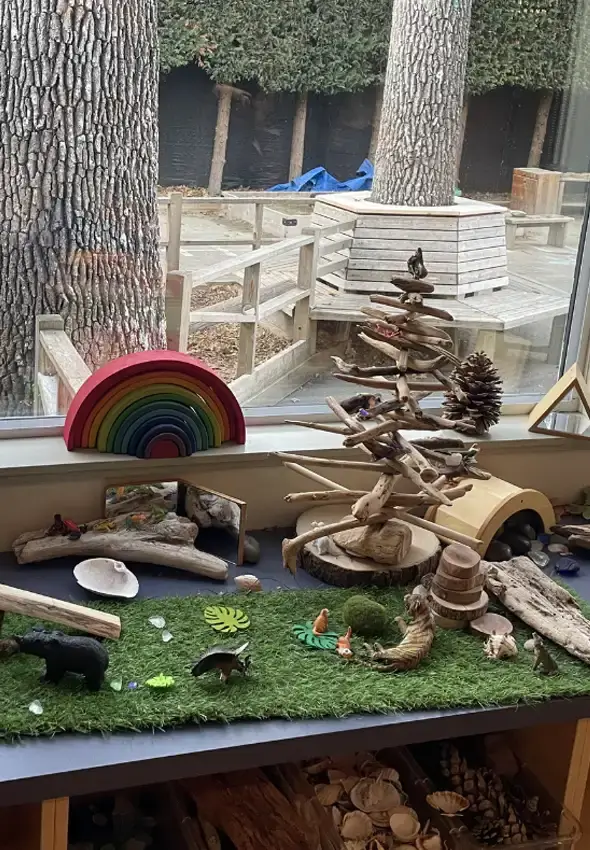
Comprehension and story structure are strengthened when children use collected natural objects to build and retell narratives, or create Story Stones that allow them to physically sequence and reconstruct a text.
Sight word automaticity — critical for fluency — benefits from active, embodied practice. Outdoor target activities, where children identify high-frequency words through physical engagement, leverage the well-established connection between movement, memory consolidation, and long-term retention.
Perhaps nowhere is the integration more natural than in emergent writing. Outdoor play environments generate authentic reasons to write: children craft signs for their constructions, record ingredients for mud kitchen recipes, issue imaginary citations to friends. These are not contrived writing tasks — they are writing in its original, purposeful form.
Dramatic play in outdoor settings also builds the narrative structures that underpin creative writing. When children develop characters, negotiate plot, and resolve conflict in the course of play, they are rehearsing the fundamental architecture of storytelling. The educator’s role is to name what is happening, extend the vocabulary, and occasionally introduce a well-placed simile or a new word that fits the moment.
Designing Environments That Do This Work
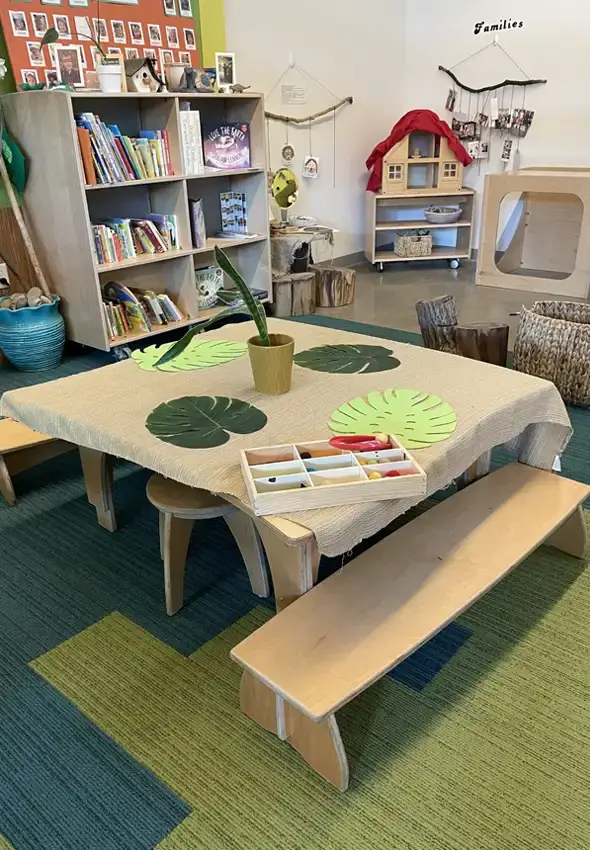
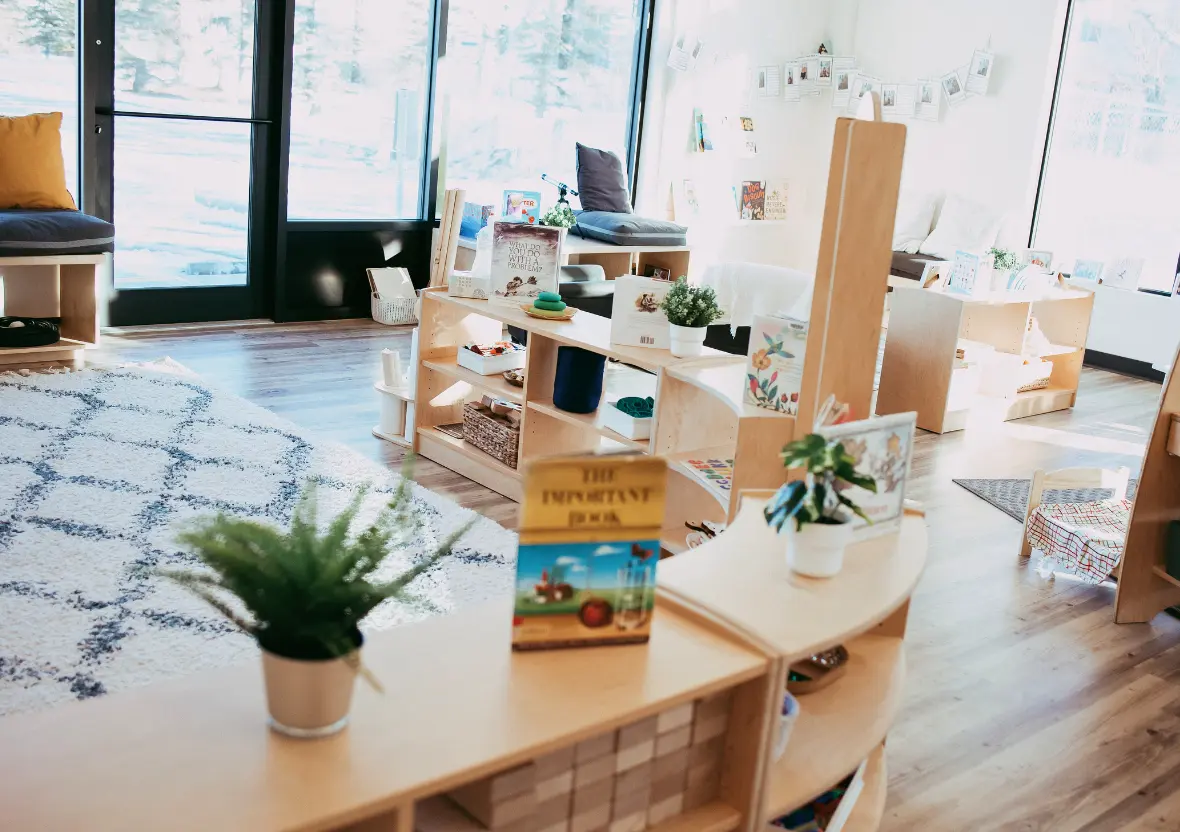
For educators and school leaders thinking about how to support nature-based literacy development through intentional design, the evidence points in a clear direction. Outdoor classrooms and reading spaces — equipped with nature-themed books, sustainable seating, and materials that invite open-ended exploration — signal to children that curiosity and language belong outside as much as in.
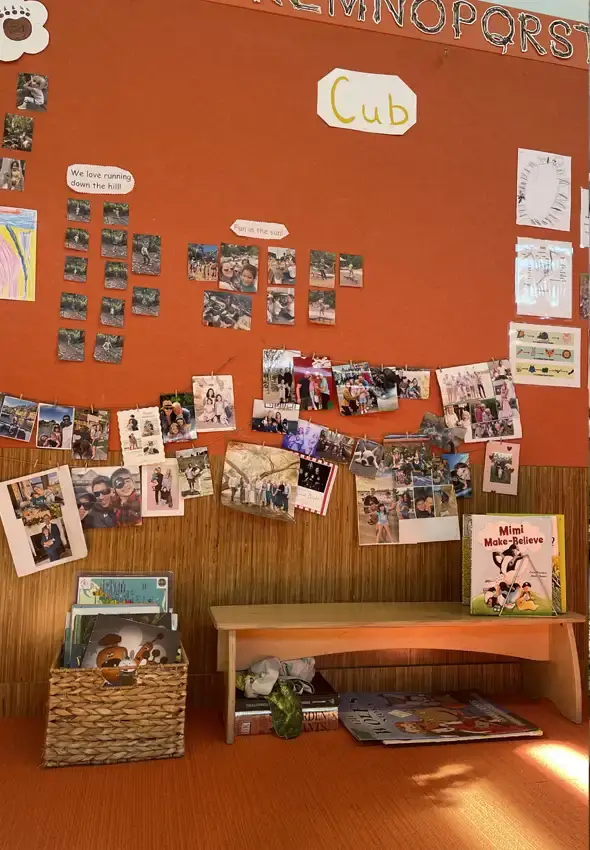
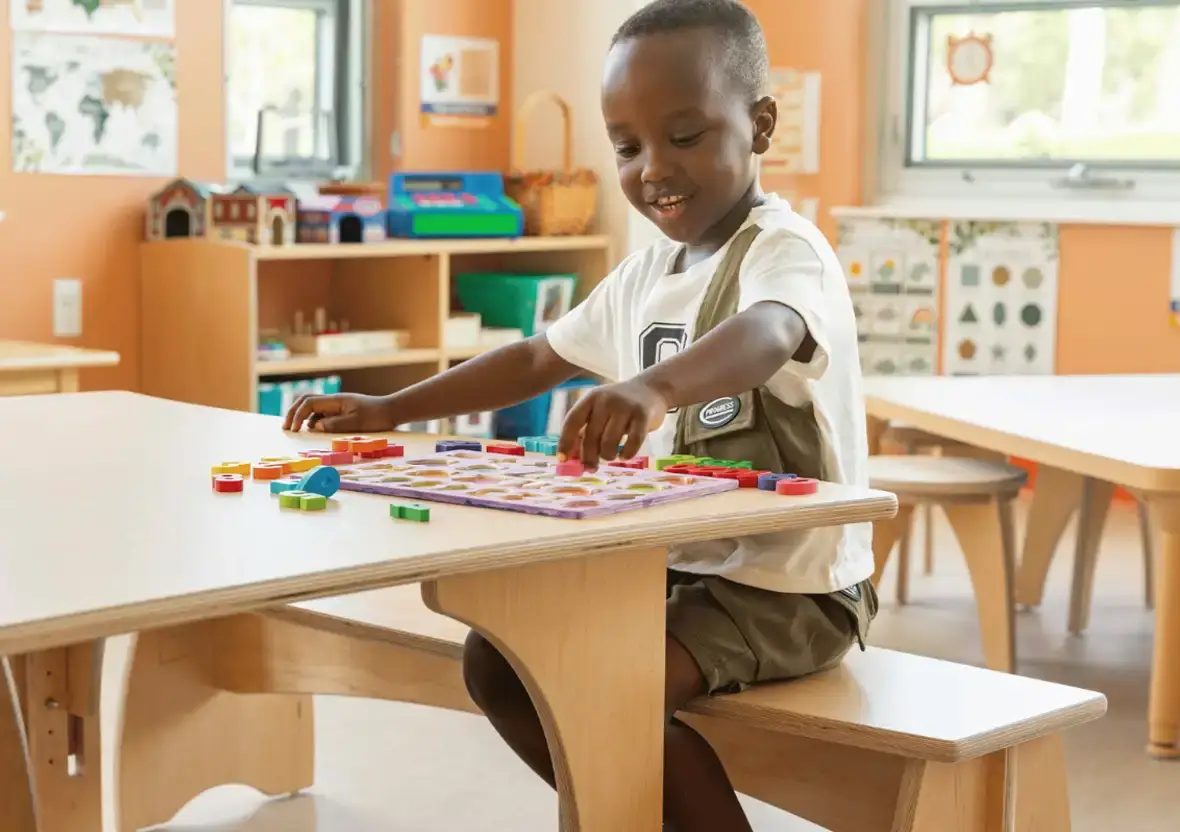
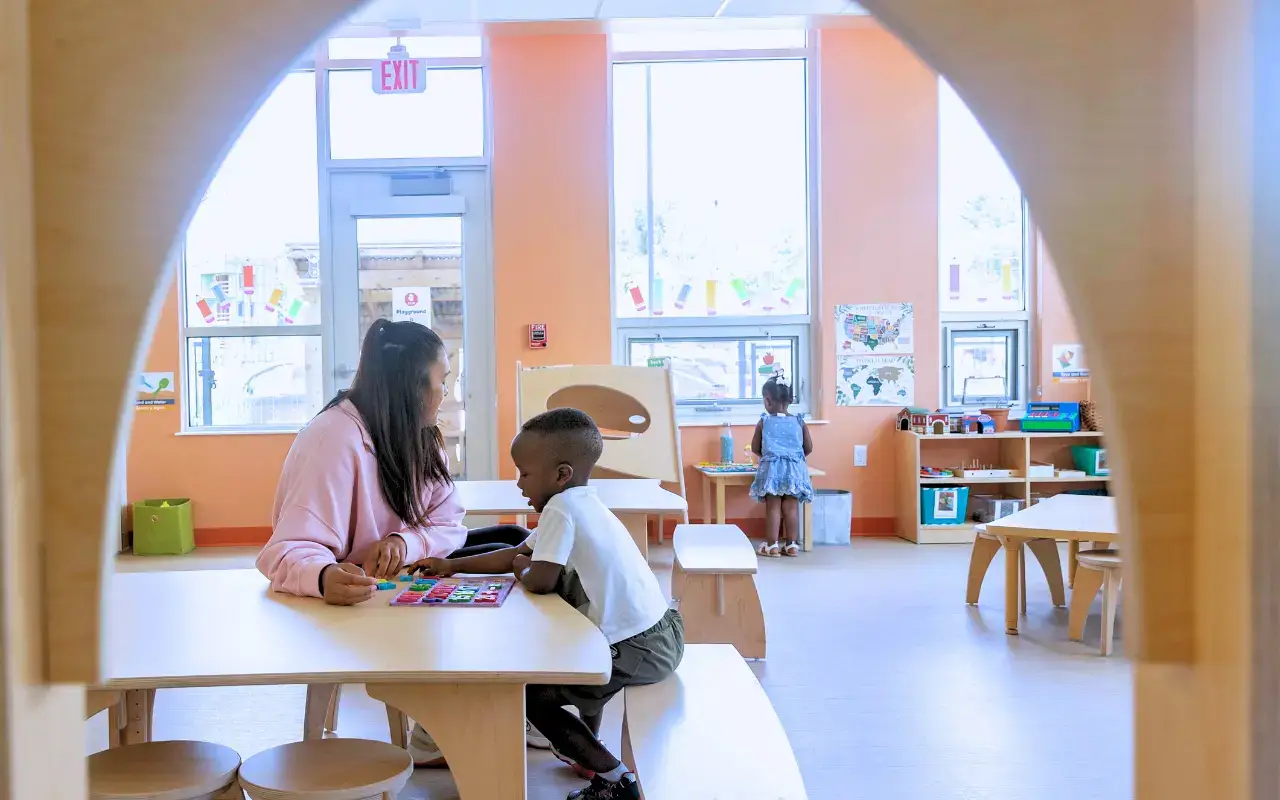
Inside, the same principles apply. Incorporating natural wood materials, organic shapes, dynamic light, and views to the outdoors brings measurable cognitive benefits into the learning environment. These are not merely aesthetic decisions. They are pedagogical ones, grounded in a growing body of research on how the designed environment shapes attention, memory, and learning.
A Different Way of Seeing Literacy
The most significant shift this research invites is a perceptual one. When a child announces that the stone soup is ready and reaches for a stick to scratch a sign into the dirt, that is literacy. When a group of children argue about what should happen next in their outdoor story, that is literacy. When a child crouches to listen to something and says, “What is that sound?” — that, too, is literacy.
The natural environment does not need to be retrofitted into early childhood literacy education. It has always been one of its richest sources. The work is in learning to see it that way — and in designing the spaces, both indoors and out, that make it possible.
About the Author: Kelly Rosensweet
Kelly Rosensweet is a mother of 2 with a diverse background in education, public administration and commercial interiors. After 10 years of teaching middle school English Language Arts, Kelly transitioned into public administration. In her tenure with the Colorado Department of Education, Schools of Choice Unit, Kelly worked to support high-quality educational choices and to promote diverse and innovative school models. Today she supports Natural Pod as an Education Thought Leader, bringing her passion for sustainability and her knowledge of empowering learners with the skills, mindset and education to drive sustainable solutions, to this eco-friendly learning furniture company.
Download our Ideabook to find an elegant collection of beautiful, durable, sustainably made furniture solutions for early learning, elementary, middle and high school furniture, as well as library and common spaces. Let’s create exceptional learning environments together. Fill out the form below to get your copy.